
Company Hub Premium
A new revenue stream, built on giving candidates a reason to stay
The brief
The business goal was straightforward to state and hard to deliver: create a new revenue stream that could sit alongside job ads and CV search, without cannibalising either. The belief driving the project was that there was untapped opportunity sitting in company information itself. Candidates were leaving the site to find the information and never coming back to apply, and companies had no good way to supply more.
Grounded in research
We tested that belief from both sides at once, running candidate and company research as two separate tracks rather than assuming one set of insights would serve both.
Company-side: expert interviews, B2B/B2C literature review, SMB discovery research.
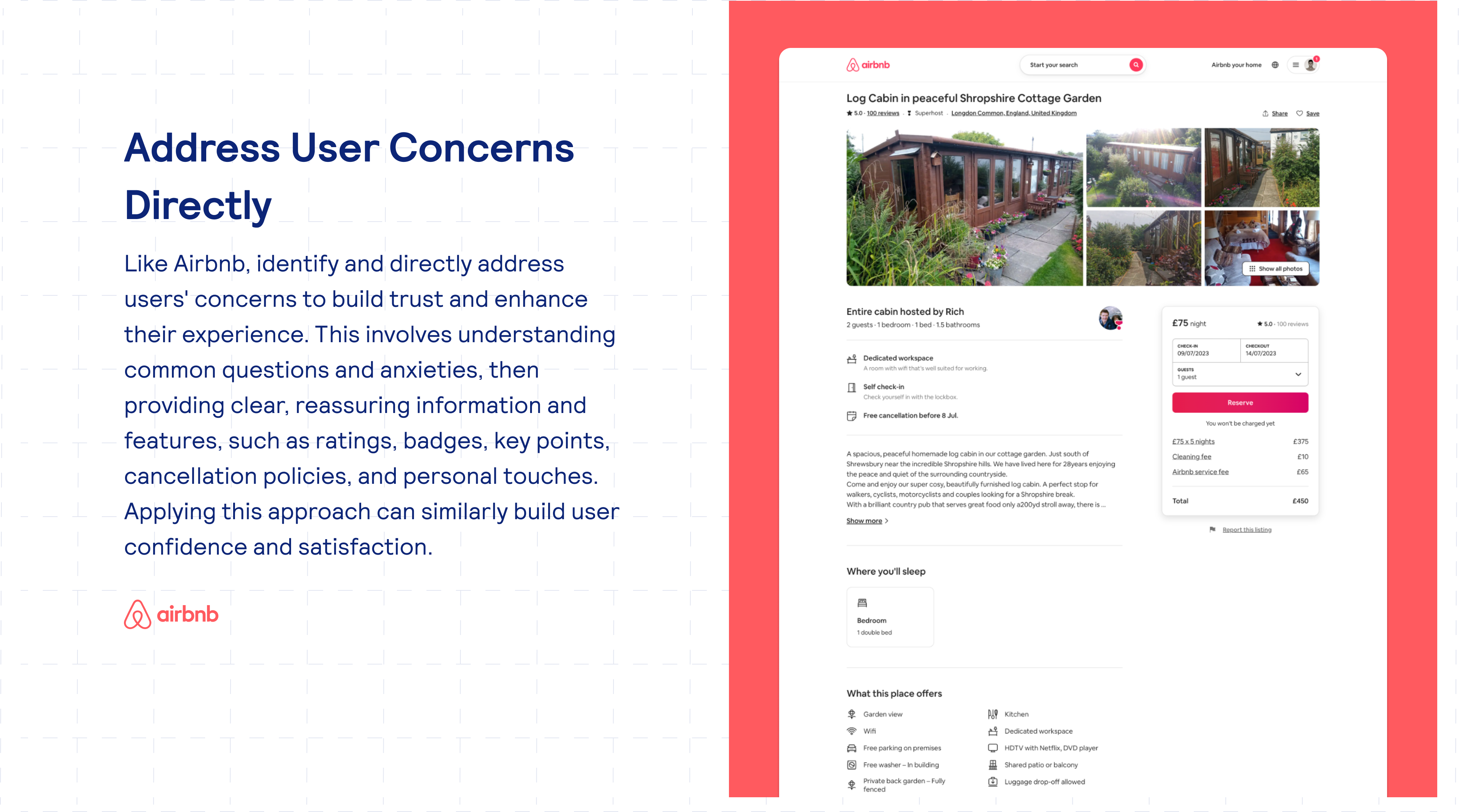
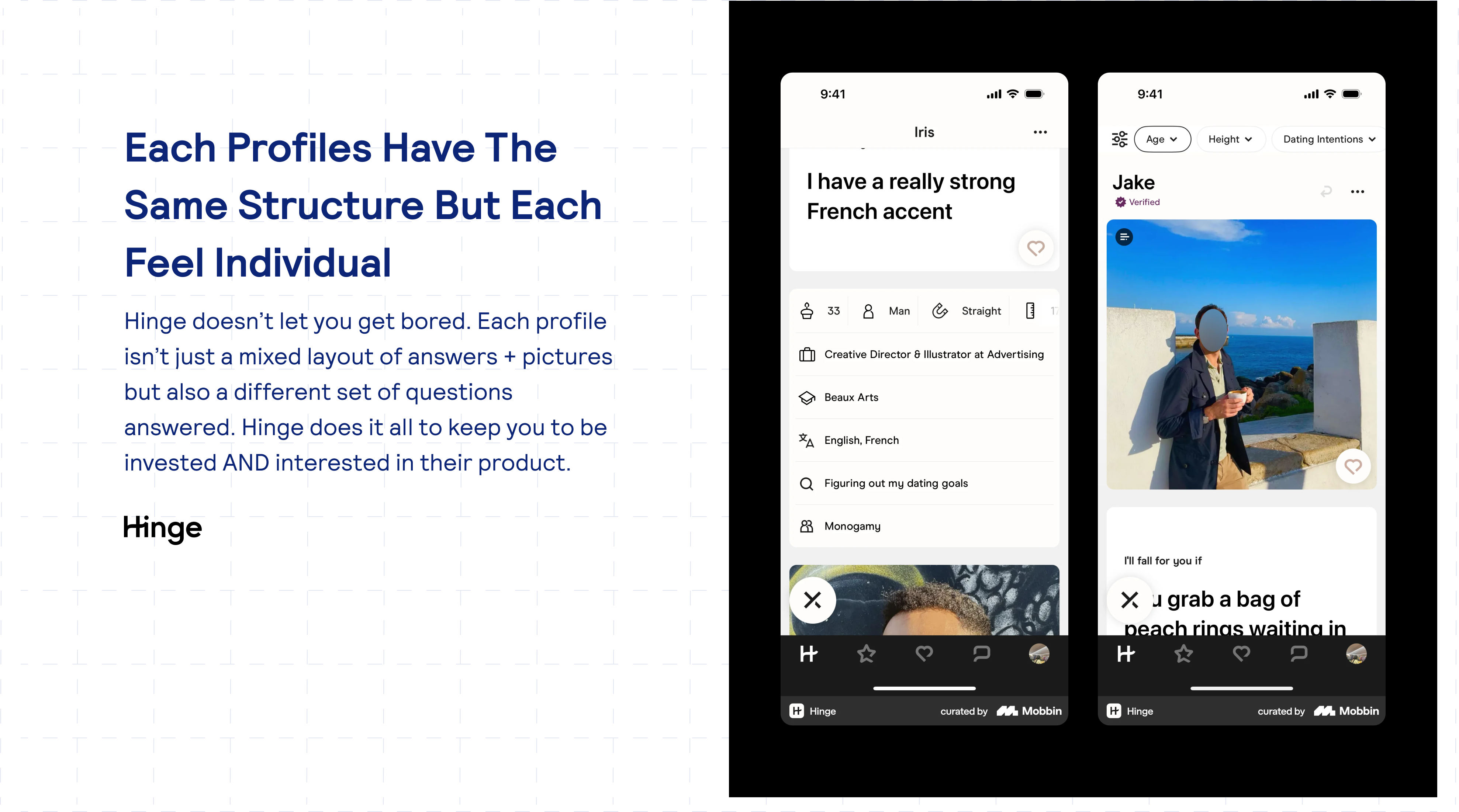
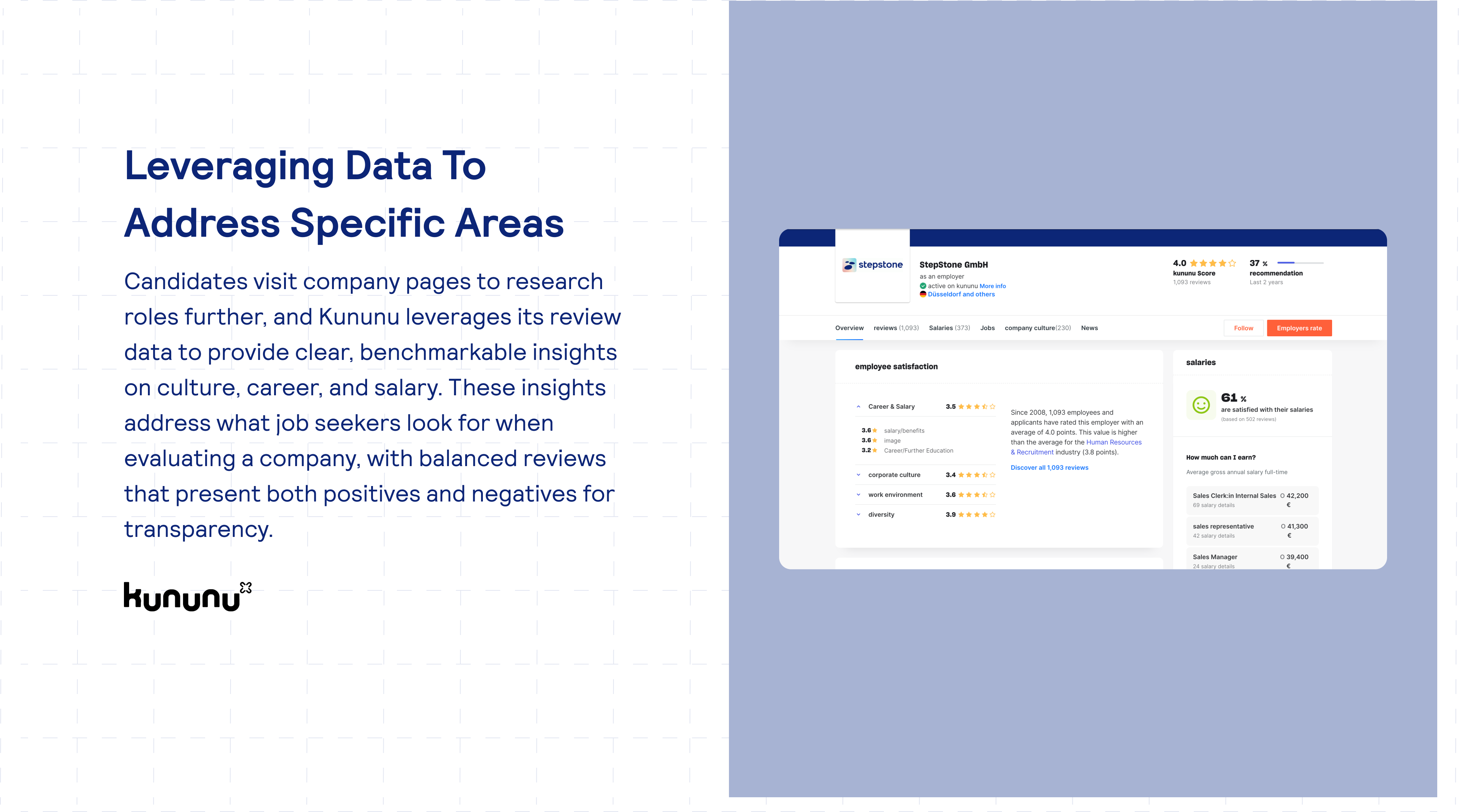
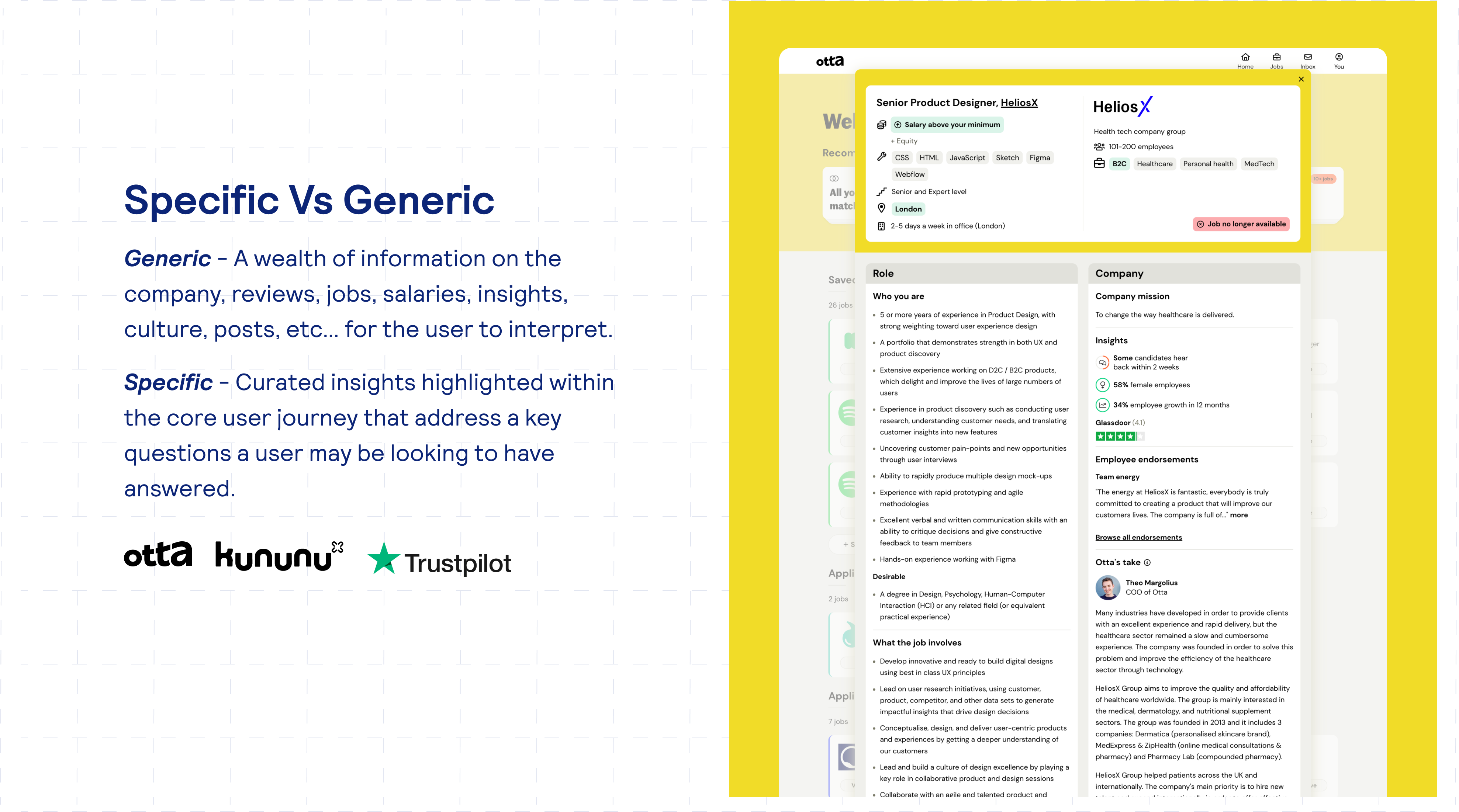
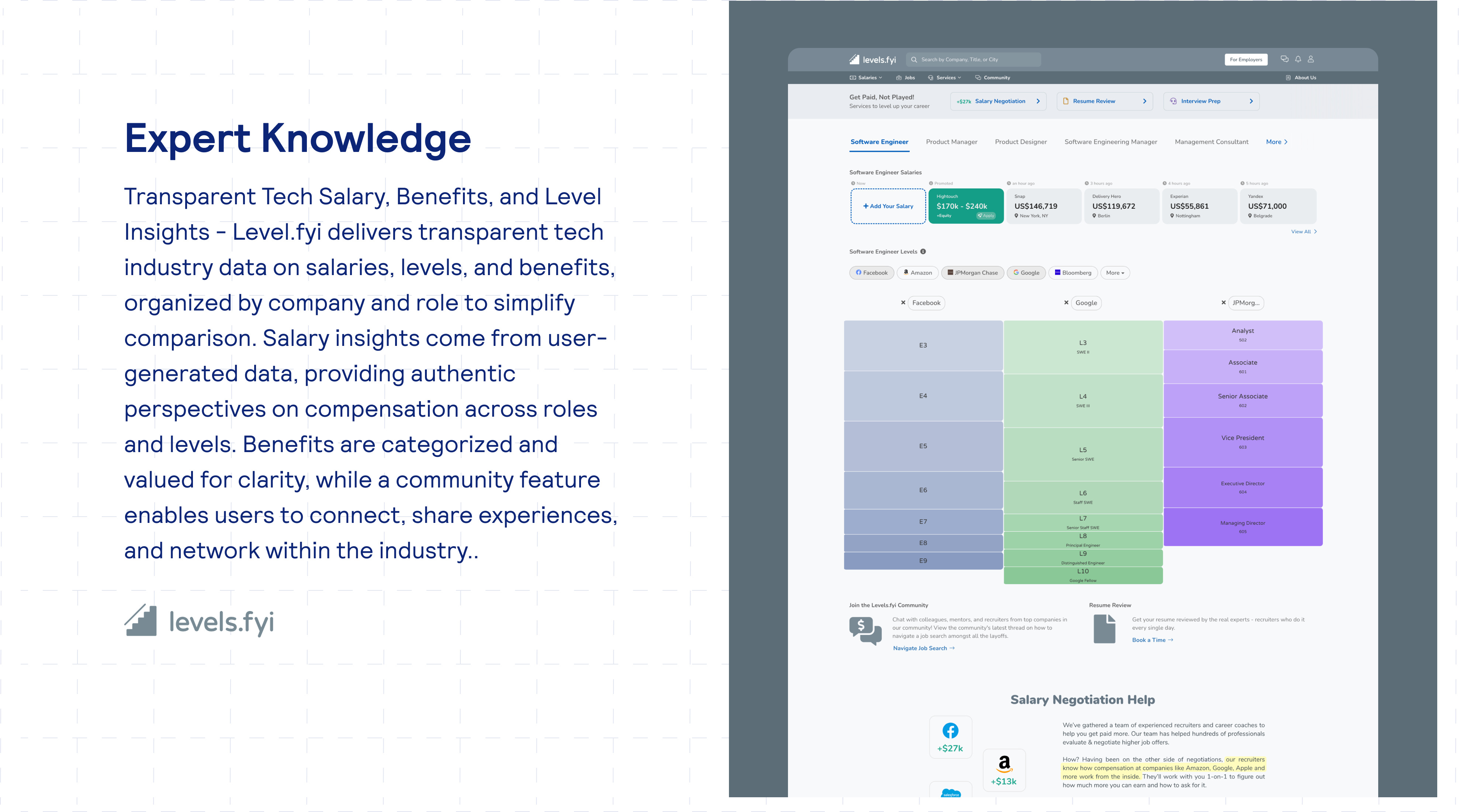
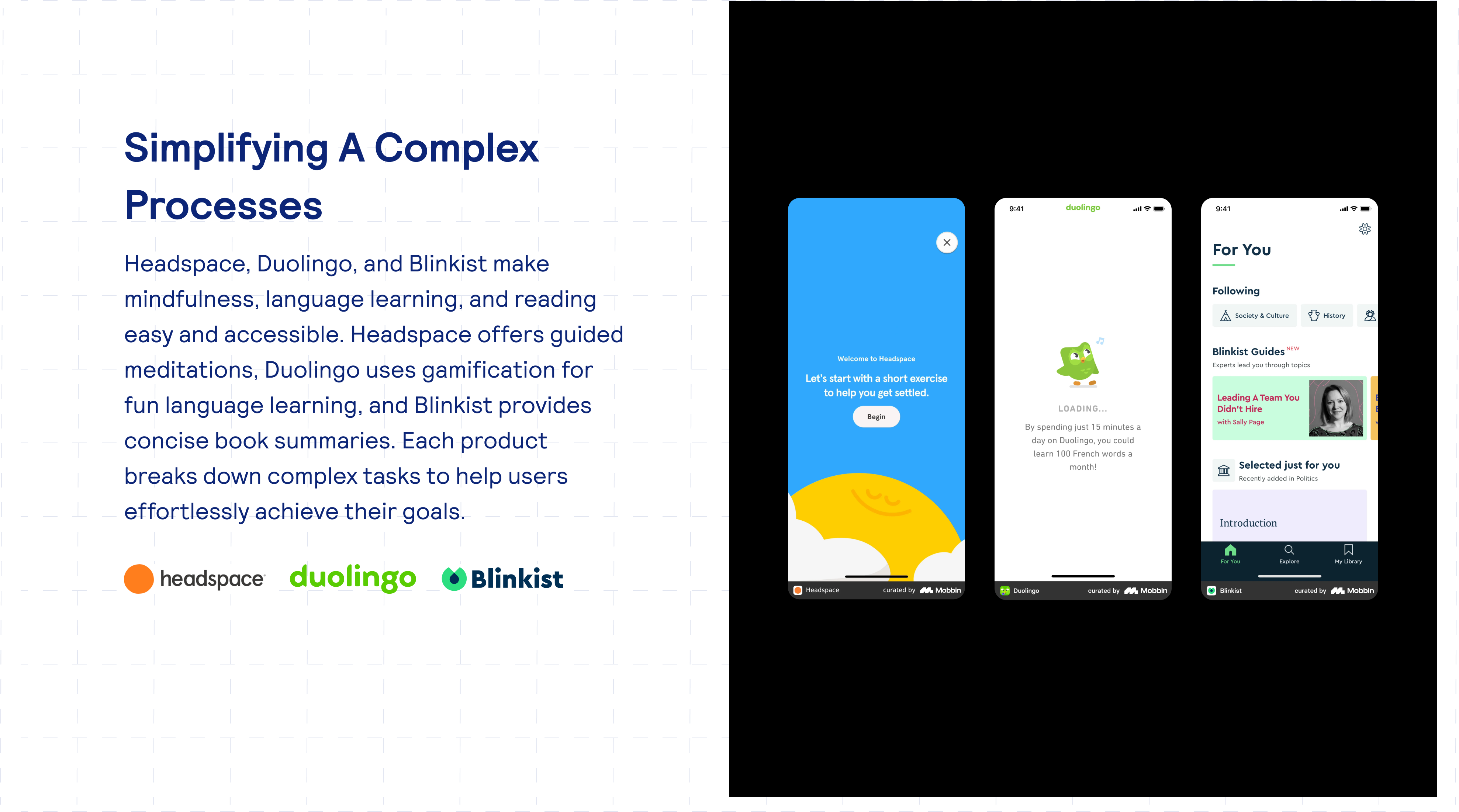
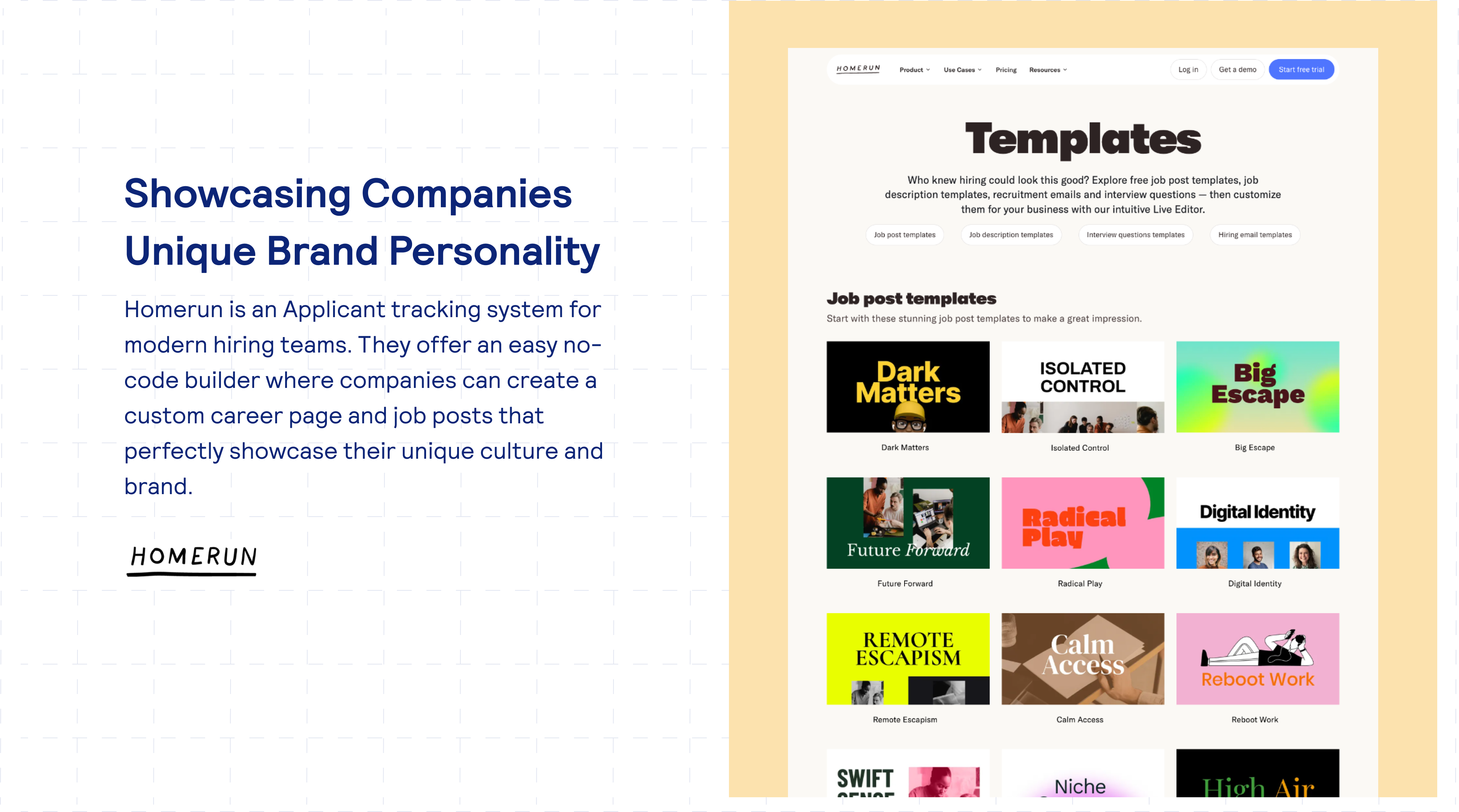
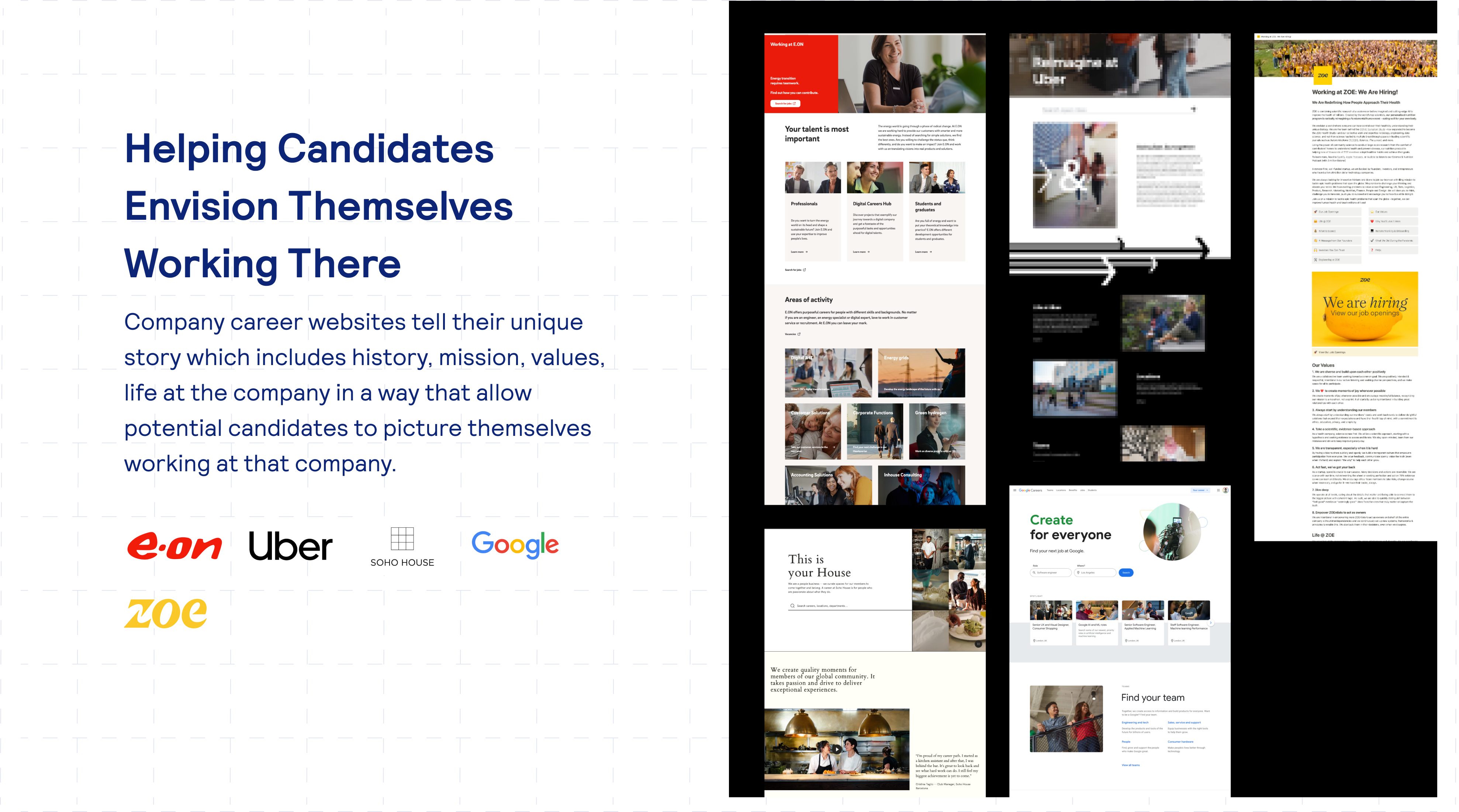
Candidate-side: unmoderated testing of an early listing prototype. Plus a “competitor” scan well outside recruitment — Airbnb (addressing anxieties directly), Kununu (comparable review data), Level.fyi (transparent salary data), Homerun (no-code pages for small companies), Headspace/Duolingo (simplifying complexity into seconds, not minutes).
What we learnt
Company side
Matching
Matching beyond job skills: the importance of cultural fit.
“[This is] something that you obviously can’t really recognize on paper, and the degree doesn’t really matter here [...] if the person simply doesn’t fit into the team, if they don’t have the same values, then it becomes difficult.” — Hiring Manager, medium-sized company group
Visibility
Selling the job is not enough to find the right talent.
“I already need 45 seconds to tell you all of this, how am I supposed to fit it into a job posting?” — Hiring Manager, small sustainability investment company
Guidance
Companies knew their story but didn’t know how to get it across in a compelling way.
“A job advertisement still comes across like it did 40 years ago, only that it’s not in the newspaper anymore, but on the internet.” — CFO and hiring manager, SMB
Candidate side
Discoverability
Job seekers have a strong bias toward recognised logos when scanning search results, which risked them prematurely dismissing companies that might be a great fit for them.
Questions, concerns & hesitationsJob seekers want the specific details to see if this company is the right fit:
- Finding out if I’m a good fit for the team
- Evaluate how future-proof a job with this company is
- Find out if the company has a good reputation
- Evaluate how high the employee turnover is in the company
- Finding out acute problems / challenges the company is facing
- Get a picture of the typical workday in this company
- Finding out who my interviewers are in the application process
From Company Match Pro to Company Hub Premium
Early concepts centred on a new entry point positioned as a company finder; matching candidates to companies on culture and values, allowing them to see passed the logo.
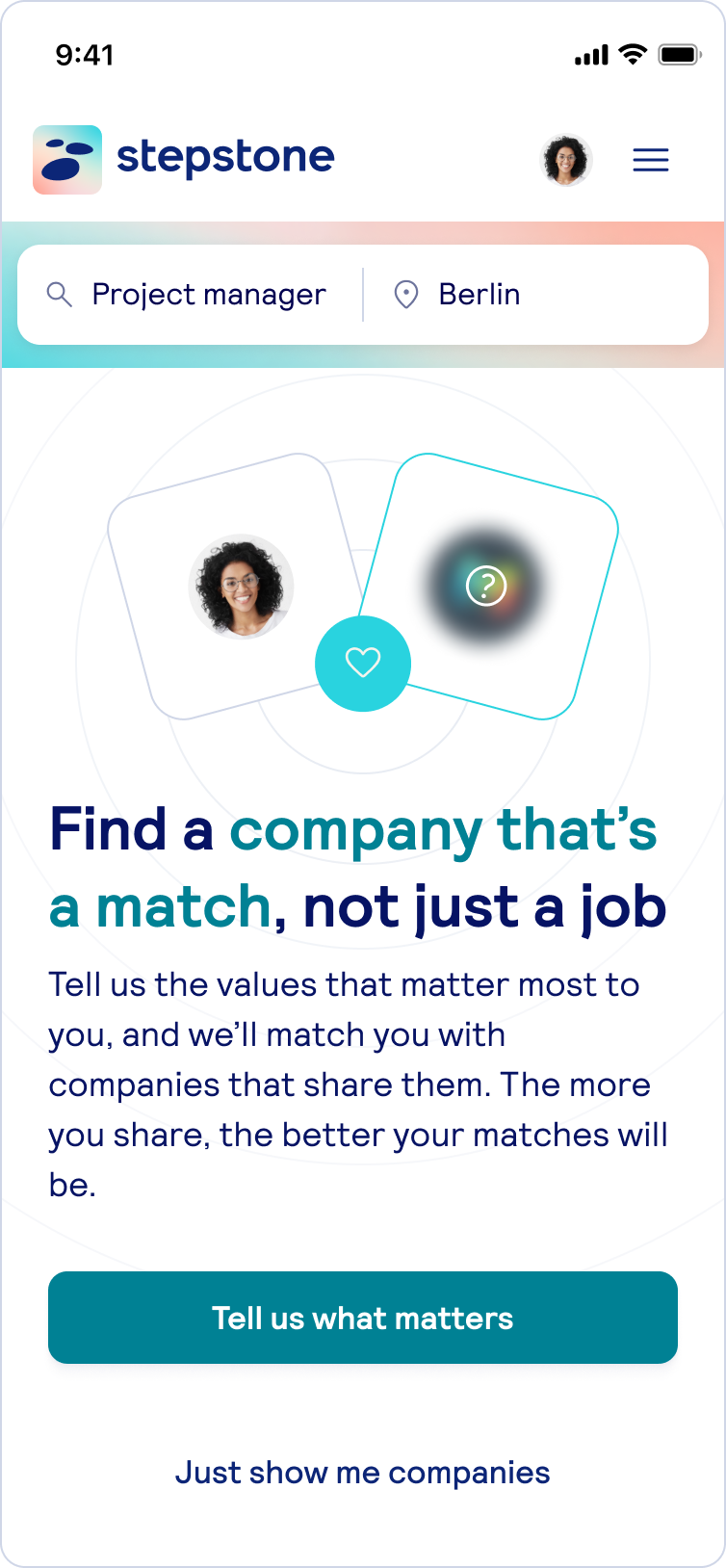
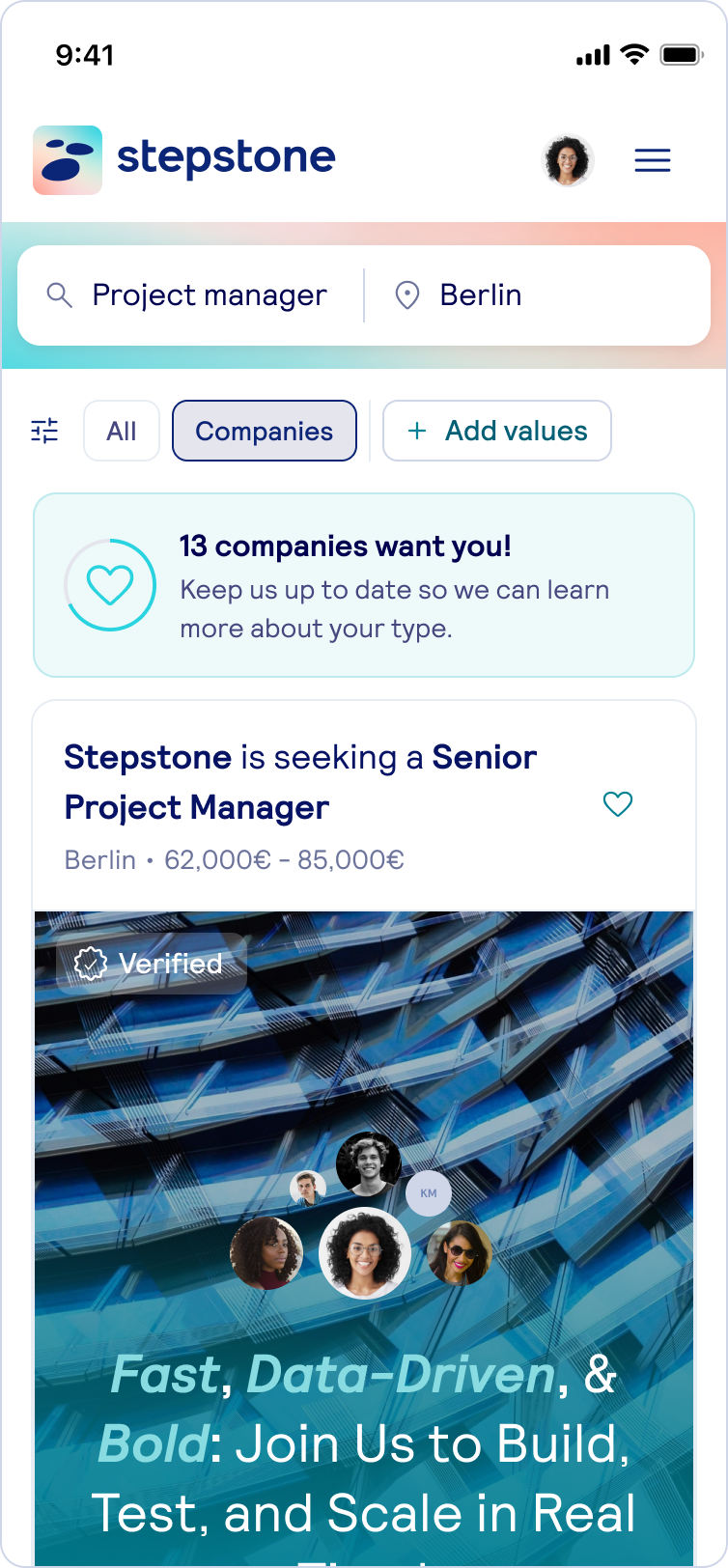
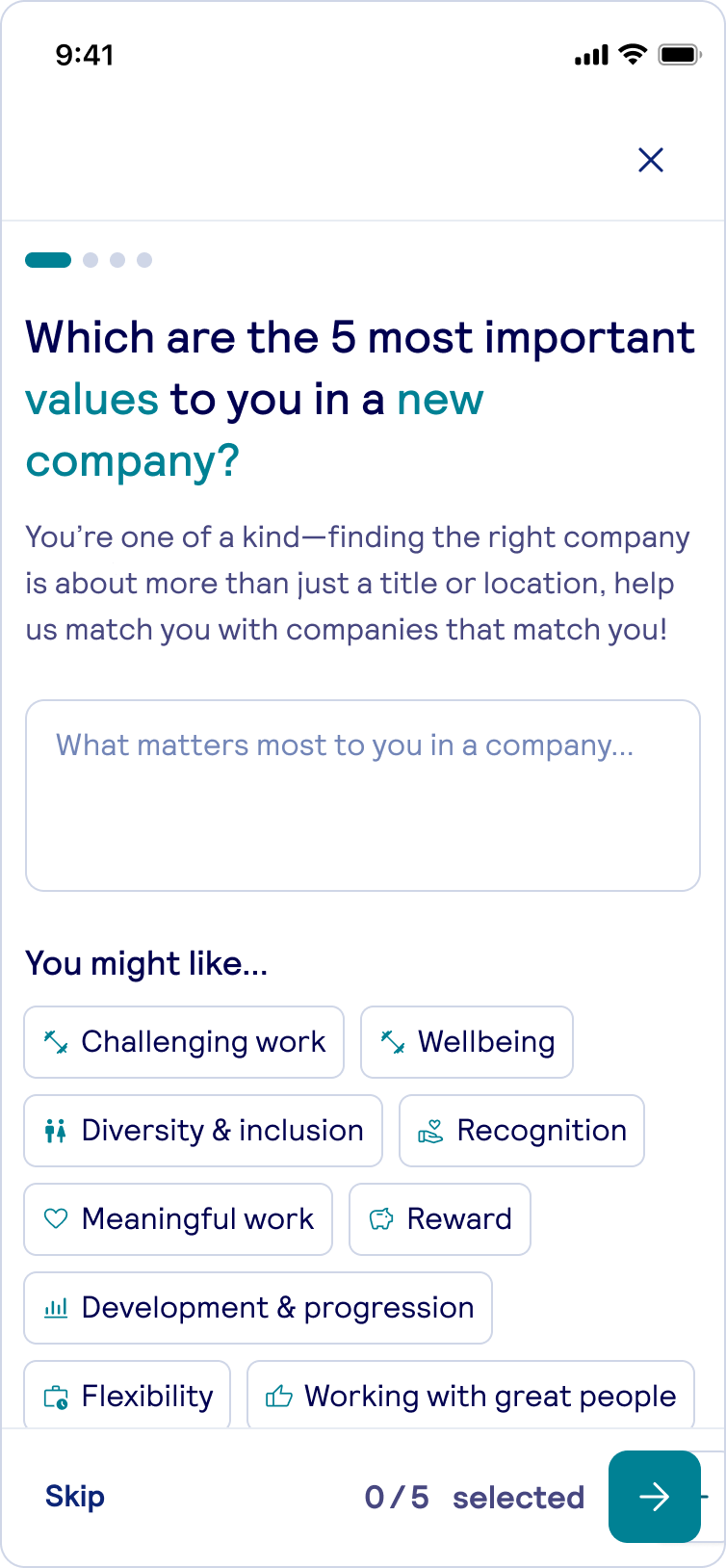
A decisive call: park Company Match Pro and instead, focus on the existing core journey and help job seekers make informed decisions on the role without the need to look elsewhere. This was purely to get something to market sooner and test client appetite.
The challenge statement shifted with it — from “how candidates discover companies” to “how Stepstone presents company information” — and the initiative became Company Hub Premium.
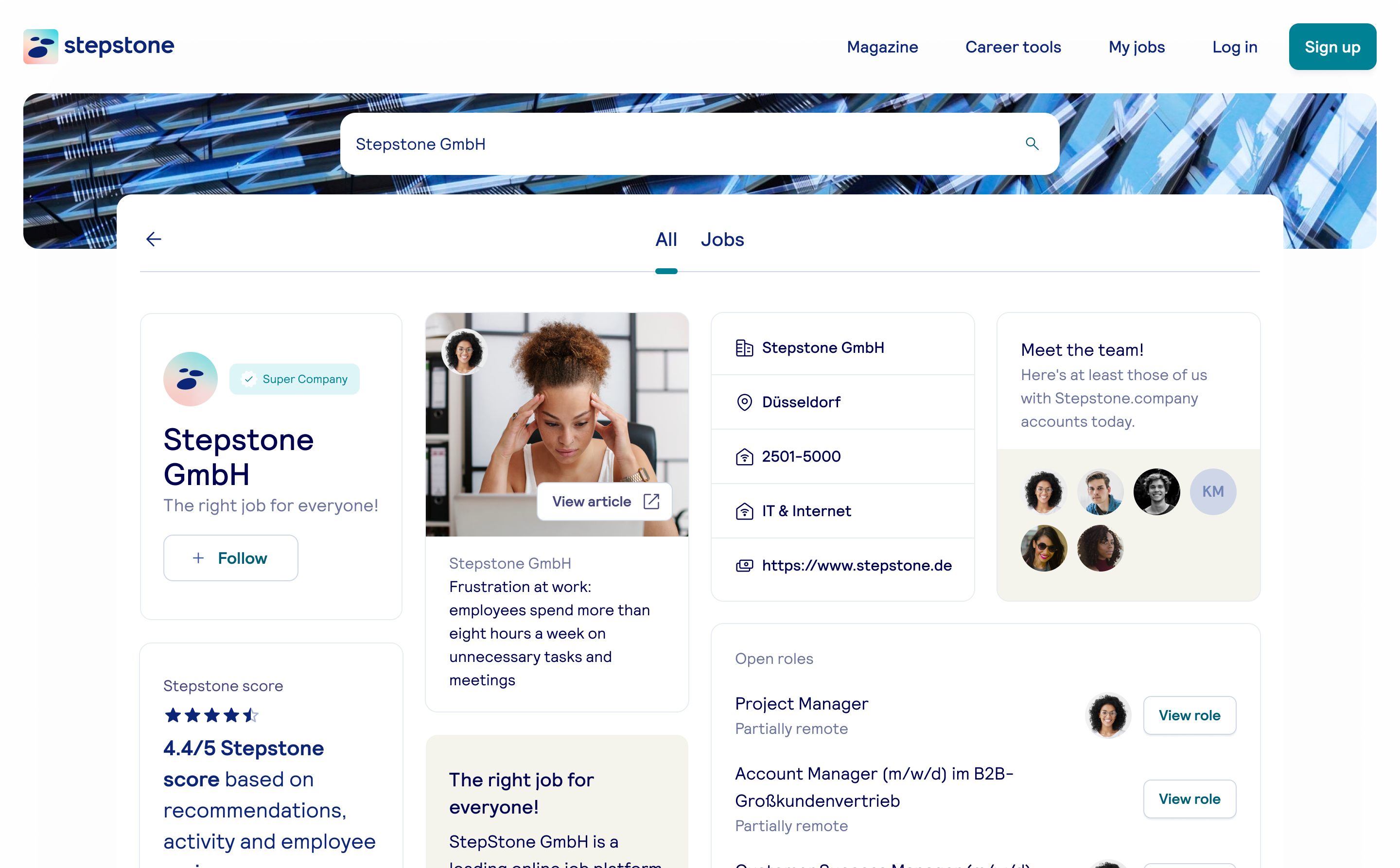
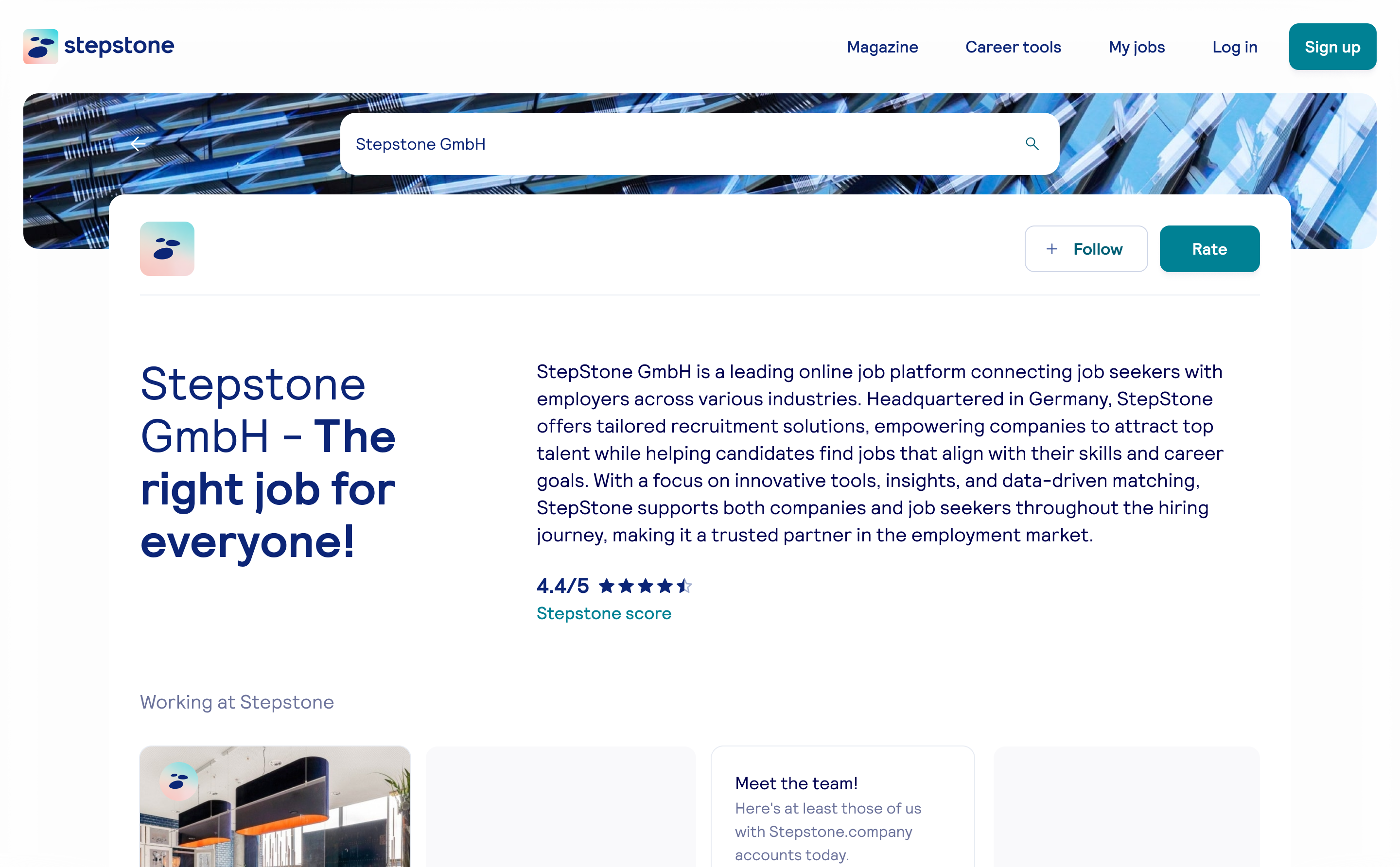
Finding the sweet spot
Give candidates enough that they don’t need to look elsewhere regardless of what products the hiring company has paid for; make Premium good enough over Free that companies actually pay.
The quality of the job seeker experience could not depend on a company’s willingness to pay us.
That tension is why “Ask me anything” became the hero feature. Something that offered an enriched experience without compromising the table stakes.
A quieter second tension: profiles need to stay consistent enough to scan quickly across hundreds of companies, while giving each one room for its own identity.
Shipped in phases
Consumption
- Richer manually-sourced content
- “Ask me anything” on client-supplied content only
- Extended to external sources
Creation
- Manually built for the client
- Self-serve page editor
- AI-powered, from supplied content or a natural-language brief
Breaking it down this way got an MVP to pilot fast, rather than waiting for the full vision.
Piloting with paying customers
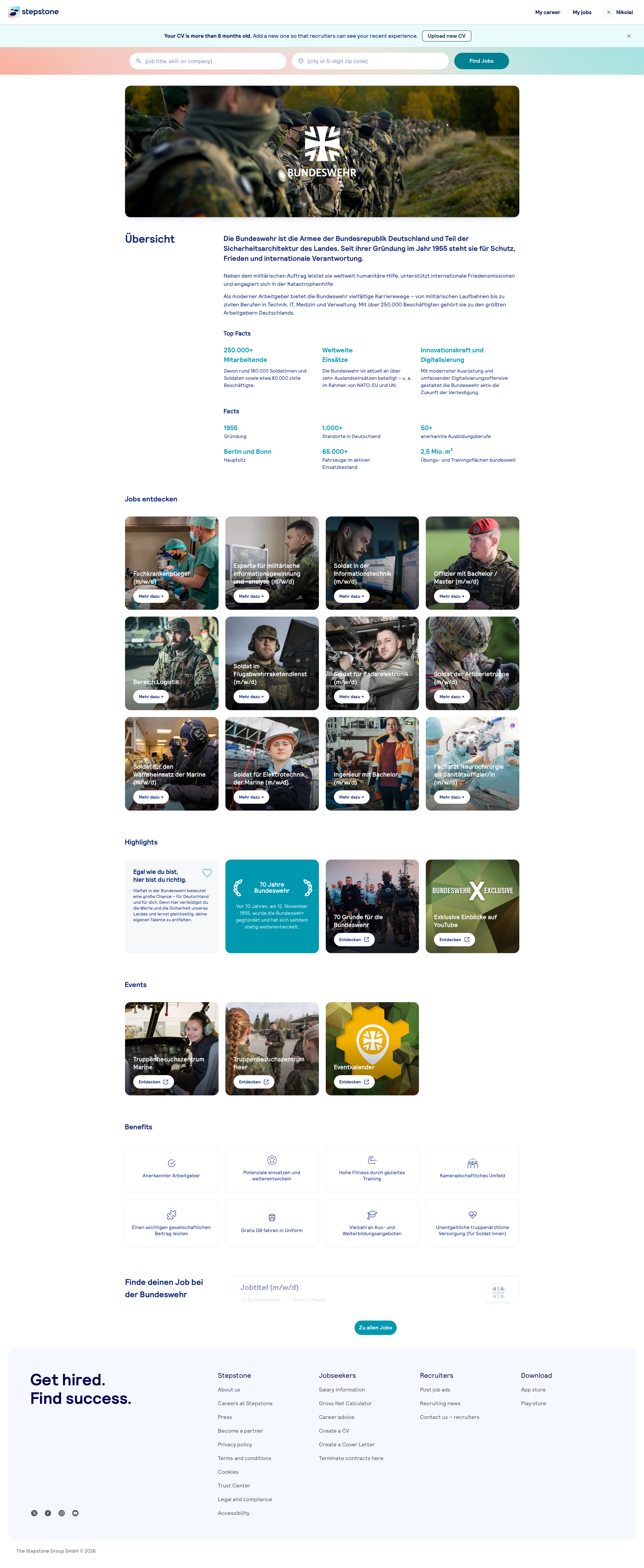
Manually-built profiles (creation phase one) sold to a handful of clients. Strong enough that several paid to extend further. The standout: an unbudgeted €TBC from a client who’d planned to cut spend — a spending decision reversed, not just upsold.
The next stage
Having proved the value on the candidate-facing side, attention could shift to the recruiter’s back-office experience — giving companies real guidance on telling their story well, rather than leaving them to fill in a blank page. That’s the direct link forward into the profile creation phases above: page editor, then AI-powered creation from either supplied content or a natural-language brief.